
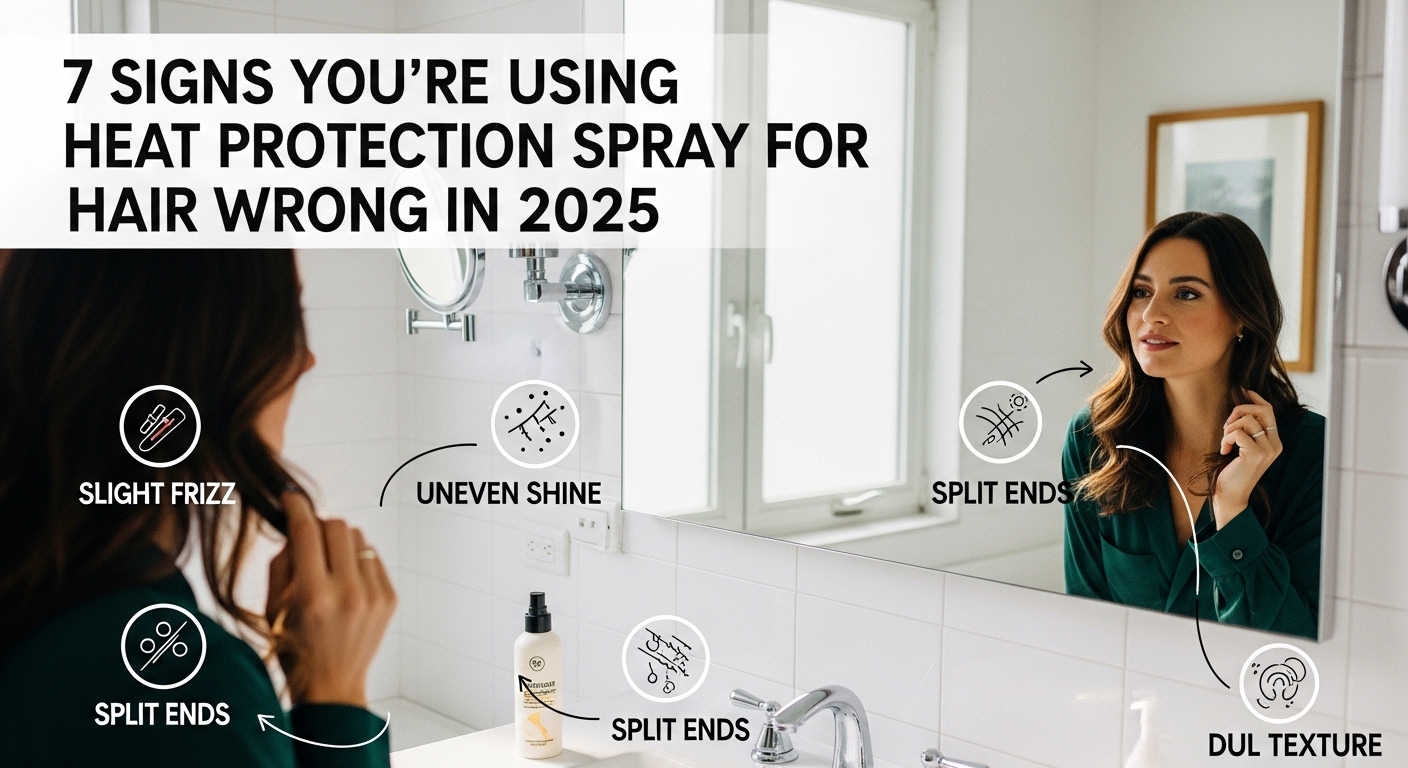

The first time I realised I needed a heat protection spray for hair, I was standing in front of the mirror, holding my flat iron, staring at my dry, frizzy ends and thinking, “How did it get this bad?” I’d done everything “right” in my mind – good shampoo, nice conditioner, a bit of oil. But my hair still felt like straw. I was actually a bit scared to touch it.
If you’ve ever looked at your hair and thought, “Why does it look so tired even after I style it?” then you and I are in the same boat. Let’s talk about what’s really going on, and how a simple product can honestly save your hair over time.
So… Do You Really Need Heat Protection?
Let me answer this fast:
If you use a hair dryer, straightener, curling wand, or even a hot brush more than once in a while, then yes, you do.
Here’s what heat does to hair in simple words:
- It sucks out moisture.
- It weakens the strands.
- It makes split ends show up faster.
- It can make your hair look dull and rough.
You don’t see it all at once. It’s slow. One day you just notice your hair doesn’t “bounce” like it used to. That’s what happened to me.
That’s where a heat protection spray for hair comes in. It’s like a tiny shield you put on each strand before you heat style. It won’t fix all damage overnight, but it can stop things from getting worse and even help your hair feel smoother.
What Is Heat Protection Spray, Really?
Let me keep this simple. A heat protection spray for hair is:
- A light mist you spray on before using heat.
- It coats your hair with a thin layer.
- This layer helps your hair handle high temperatures better.
Most good ones also:
- Add a bit of shine.
- Help with frizz.
- Make hair feel softer.
Some are called “heat protectant sprays” or “thermal sprays” – it’s basically the same idea. The main goal is to protect your hair from heat so it doesn’t dry out or break so easily.
How to Choose the Right Spray for Your Hair
I used to stand in the shop staring at ten different bottles, feeling totally lost. So here’s how I choose now, in a calm, simple way.
1. Look at your hair type
Fine or thin hair
Go for a light, non-greasy spray. Look for words like “lightweight” or “fine hair.” You don’t want anything heavy.Thick or coarse hair
A richer protectant or cream can work well. You might like a spray that also tames frizz.Curly or natural hair
Choose something that says “moisturising” or “anti-frizz.” Many curl-friendly brands include heat protectants too.
2. Check the temperature on the label
If you use:
- A flat iron or curling iron often
- Or blow-dry on high heat
Then pick a heat protection spray for hair that protects up to at least 200–230°C. Many products show this on the back or front label.
3. Extra bonuses to look for
I like sprays that also offer:
- UV protection (for sun damage)
- Anti-frizz help (especially in humid weather)
- A bit of hold (so curls last longer)
You don’t need all of this at once, but it’s nice when one bottle can do a few jobs.
How to Use Heat Protection Spray (Step by Step)
This part can make a huge difference. Using a good product the wrong way is like having an umbrella and still walking in the rain without opening it.
Here’s how I use my heat protection spray for hair most days:
Start with clean, damp or dry hair
You can use it on towel-dried hair before blow-drying, or on dry hair before straightening or curling.Shake the bottle
This helps mix all the good stuff inside.Section your hair
- Split your hair into 2–4 sections.
- The thicker your hair, the more sections you may need.
Spray from a distance
- Hold the bottle about an arm’s length away (around 15–20 cm).
- Spray lightly from mid-lengths to ends.
- Avoid soaking your roots unless the label says it’s okay.
Comb or finger-comb through
This spreads the product evenly so every strand gets some protection.Wait a moment
Give it 1–2 minutes to settle in, especially on damp hair.Then use your heat tool
- Keep the temperature as low as you can while still getting the style you want.
- Move the iron or dryer – don’t leave it on one spot for too long.
Common Mistakes (I’ve Done Them All)
Let me be honest about a few things I used to do wrong:
Using no protection at all
I thought, “It’s just one quick pass with the straightener.” But those “one quick passes” add up.Spraying only the top layer
I used to spray only what I could see. The hair underneath fried quietly. Make sure you get all sections.Using the highest heat for no reason
My straightener went up to 230°C so I used it… for no reason. Now I use the lowest setting that still smooths my hair.Spraying after I’ve already used heat
By then, the damage is done. Always spray before using hot tools.Using way too much product
More is not always better. Too much can leave hair sticky or greasy. Light, even layers are best.
Using a heat protection spray for hair the right way honestly made my hair feel softer within a week or two. Not perfect, but better. And it kept getting better as I stuck with it.
Extra Tips to Keep Your Hair Happy
To really help your hair bounce back and stay strong, I like to do a few more small things:
Take “no-heat” days
Let your hair air-dry when you can. Put it in a braid or a bun instead of straightening.Use a deep conditioner once a week
Heat protection is great, but your hair still loves extra moisture.Trim your ends regularly
Even every 8–12 weeks helps. It stops split ends from climbing up the hair shaft.Don’t use too many harsh products
Lots of strong hairspray, gel, and then heat on top can be rough on your strands.Use a good brush or wide-tooth comb
Be gentle when detangling, especially when hair is wet.
All these little habits, plus a solid heat protectant, can change the way your hair looks and feels over time.
Quick Answers to Questions You Might Have
1. Can I use a serum or oil instead of a heat protectant?
Some oils help a bit, but they’re not made to handle very high heat. Many can actually cook your hair if you use them before straightening. I still use hair oil – but after styling, not as my main shield.
2. Do I need to use a heat protection spray for hair every single time?
If you use any hot tool, I’d say yes. Think of it like sunscreen. The sun might not burn you every day, but over time it always leaves a mark.
3. Will it make my hair greasy?
A good spray, used lightly and chosen for your hair type, should not. If your hair feels oily or heavy, try:
- Using less product
- Spraying from further away
- Swapping to a lighter formula
4. Can I layer it with other products?
Yes, but go slow. I like this order on damp hair:
- leave-in conditioner (if I use one)
- heat protectant
- a tiny bit of styling cream if needed.
On dry hair before curling, I usually just use the protectant alone.
Why I Don’t Skip It Anymore
I used to think this was just another “extra” product brands wanted me to buy. But after seeing how weak and tired my hair got, I changed my mind. Now, using a heat protection spray for hair is as normal to me as plugging in my straightener.
When I skip it, I feel like I’m cheating on my own hair. Dramatic? Maybe. But I’ve seen the difference, so I can’t unsee it.
Ready to Give Your Hair a Little Shield?
If you’re still reading, I’m guessing you care about your hair as much as I do. Here’s what I’d love you to do next:
- Pick a heat protection spray for hair that suits your hair type.
- Use it every single time before you blow-dry, straighten, or curl.
- Lower your heat setting just a bit.
- Stick with this for at least two weeks.
Watch how your hair starts to feel:
- Less rough at the ends
- A bit shinier
- Easier to style
And if you ever find yourself staring at your hair in the mirror, like I did in the beginning, wondering why it looks so tired, remember: you’re not stuck with that. Small changes, like adding a good heat protectant, can honestly bring your hair back to life over time.
So, are you going to style your hair tomorrow? Let’s make a deal: heat tools in one hand, spray in the other. Your future hair will thank you.