
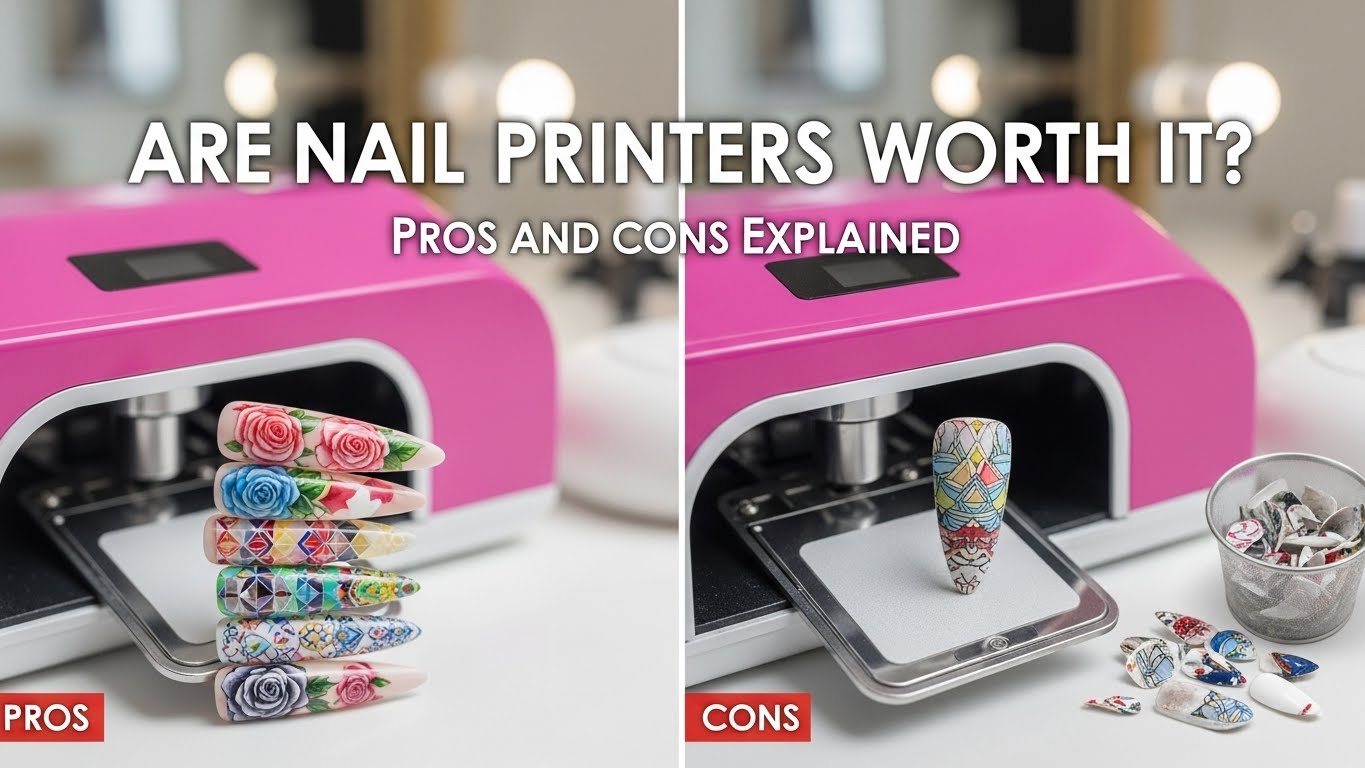

If you’re thinking about getting a nail printer for your home or salon, you’re probably wondering if it’s really worth spending your money on one. The short answer is that nail printers can be a good buy if you want quick, detailed nail art without the skill needed for hand-painting. They work best for people who love fancy nail designs but don’t have the time or steady hands to create them. However, they come with some downsides like high costs and limited design options compared to a talented nail tech.
What Exactly Is a Nail Printer?
A nail printer is a small machine that prints designs directly onto your nails. Think of it like a tiny printer, but instead of paper, it uses your fingernails as the canvas. You pick a design from an app or the machine’s library, place your finger in the slot, and within seconds, you have a printed design on your nail.
These machines have become quite popular in South Africa, especially in busy salons in Joburg, Cape Town, and Durban. Many nail lovers are also buying them for home use.
How Do Nail Printers Work?
The process is pretty simple:
- You apply a base coat to your nails and let it dry
- You choose your design from the printer’s options
- The machine scans your nail to get the right size
- You place your finger inside the machine
- The printer applies the design in seconds
- You seal everything with a top coat
Most nail printers use special ink that’s safe for nails. The whole process takes about 30 seconds to a minute per nail.
The Good Things About Nail Printers
Let me share what makes these machines attractive to many people.
Speed and Convenience
One of the biggest wins is how fast they work. Getting detailed nail art by hand can take over an hour at a salon. With a nail printer, you can have all ten nails done in about 15 to 20 minutes. For busy moms, working women, or anyone with a packed schedule, this is a big deal.
Perfect for Beginners
Not everyone has the gift of steady hands. If you’ve ever tried to paint tiny flowers or patterns on your nails and ended up with a mess, you’ll appreciate how a nail printer takes away the struggle. You don’t need any artistic skills – the machine does all the work.
Endless Design Options
Most nail printers come with thousands of pre-loaded designs. From geometric patterns to photos of your pets, the options are almost endless. Some machines even let you upload your own pictures. Want your favourite soccer team’s logo on your nails for match day? Easy.
Great for Salons
If you run a nail salon in South Africa, a nail printer can help you serve more clients in less time. You can offer unique designs that hand-painting would take too long to create. This means more happy customers and more money in your pocket.
Consistent Results
Every print comes out the same. Unlike hand-painted designs that might look slightly different on each nail, printed designs are uniform and neat every time.
The Not-So-Good Things About Nail Printers
Now let’s talk about the downsides, because there are a few you should know about.
The Price Tag
Quality nail printers don’t come cheap. In South Africa, you’re looking at anywhere from R3,000 to R15,000 or more for a decent machine. That’s a lot of money, especially when you add the cost of special inks and supplies. For home users, it might take a long time before you save money compared to just going to a salon.
Ink and Supply Costs
The printer itself is just the start. You’ll need to keep buying ink cartridges, which can cost between R200 and R500 each. Depending on how often you use the machine, these costs add up quickly.
Learning Curve
While the machines are easier than hand-painting, they’re not completely foolproof. You need to learn how to position your finger correctly, pick the right settings, and troubleshoot when things go wrong. Some people find this frustrating at first.
Limited to Flat Surfaces
Nail printers work best on flat nail surfaces. If your nails are very curved, short, or have ridges, the print might not come out perfectly. The machine can’t adapt to unusual nail shapes the way a skilled nail tech can.
Durability Questions
Many users report that printed designs don’t last as long as gel polish or hand-painted nail art done by a pro. The prints can start chipping or fading within a few days if you don’t apply a good top coat and take care of your nails properly.
Fewer Personal Touches
There’s something special about hand-crafted nail art. A talented nail technician can add 3D elements, chrome effects, and textures that a printer simply cannot copy. If you love those trendy nail styles you see on Instagram, a printer might leave you feeling limited.
Machine Problems
Like any electronic device, nail printers can break down. Finding repairs or replacement parts in South Africa can be tricky for some brands. You might end up with an expensive paperweight if something goes wrong.
Who Should Buy a Nail Printer?
Based on my experience in the beauty industry, here’s who I think would benefit most:
Salon Owners – If you run a busy salon and want to offer quick nail art services, a printer makes sense. You can charge extra for printed designs and see a return on your investment within months.
Nail Art Lovers Who Can’t Paint – If you adore detailed nail designs but can’t create them yourself, a home printer lets you have fancy nails whenever you want.
People Who Do Nails Often – If you’re someone who changes their nail art weekly, the cost per use goes down over time, making the investment more worthwhile.
Who Should Skip the Nail Printer?
Occasional Nail Art Users – If you only get your nails done for special occasions, it’s cheaper to visit a salon.
Fans of 3D and Textured Nail Art – Printers can’t create raised designs, gems, or special finishes.
Those on a Tight Budget – The upfront cost plus ongoing supplies might strain your wallet.
Popular Nail Printer Brands Available in South Africa
If you’ve decided to buy one, here are some brands you might come across:
- O’2Nails – One of the most popular brands, known for good quality prints
- Anjou – A more budget-friendly option
- Funcolor – Offers mobile app connectivity
- Eget – Popular in professional salon settings
Prices and availability can change, so check with local beauty suppliers or online stores like Takealot for current options.
Tips for Getting the Best Results
If you do buy a nail printer, here’s how to make sure you get great results:
- Always start with clean, oil-free nails
- Apply a smooth base coat and let it dry completely
- Make sure your nails are as flat as possible
- Follow the machine’s instructions exactly
- Use a quality top coat to protect your design
- Avoid water for at least an hour after printing
What Real South African Users Say
I’ve chatted with several salon owners and nail lovers in SA who use these machines. The feedback is mixed. Salon owners generally love them because they can offer unique services quickly. Home users are split – some adore the convenience, while others feel the results don’t match what they expected.
One nail tech from Pretoria told me, “The printer paid for itself in two months. My clients love getting custom designs printed in minutes.”
A home user from Durban shared, “I was excited at first, but the prints don’t last as long as I hoped. I still end up going to the salon for special events.”
The Bottom Line – Is It Worth Your Rands?
A nail printer is worth it if you’ll use it often and you understand its limits. For salon owners looking to offer quick nail art services, it’s a smart business move. For home users who love changing their nail designs regularly, it can save time and money in the long run.
However, if you’re after long-lasting, salon-quality results with 3D effects and special finishes, you’ll still need a skilled nail technician. The printer is a tool, not a replacement for true artistry.
Before you buy, think about how often you’ll use it, whether you can afford the ongoing costs, and if the design options will make you happy. Visit a salon that uses one first if you can, so you can see the results in person before spending your hard-earned money.