
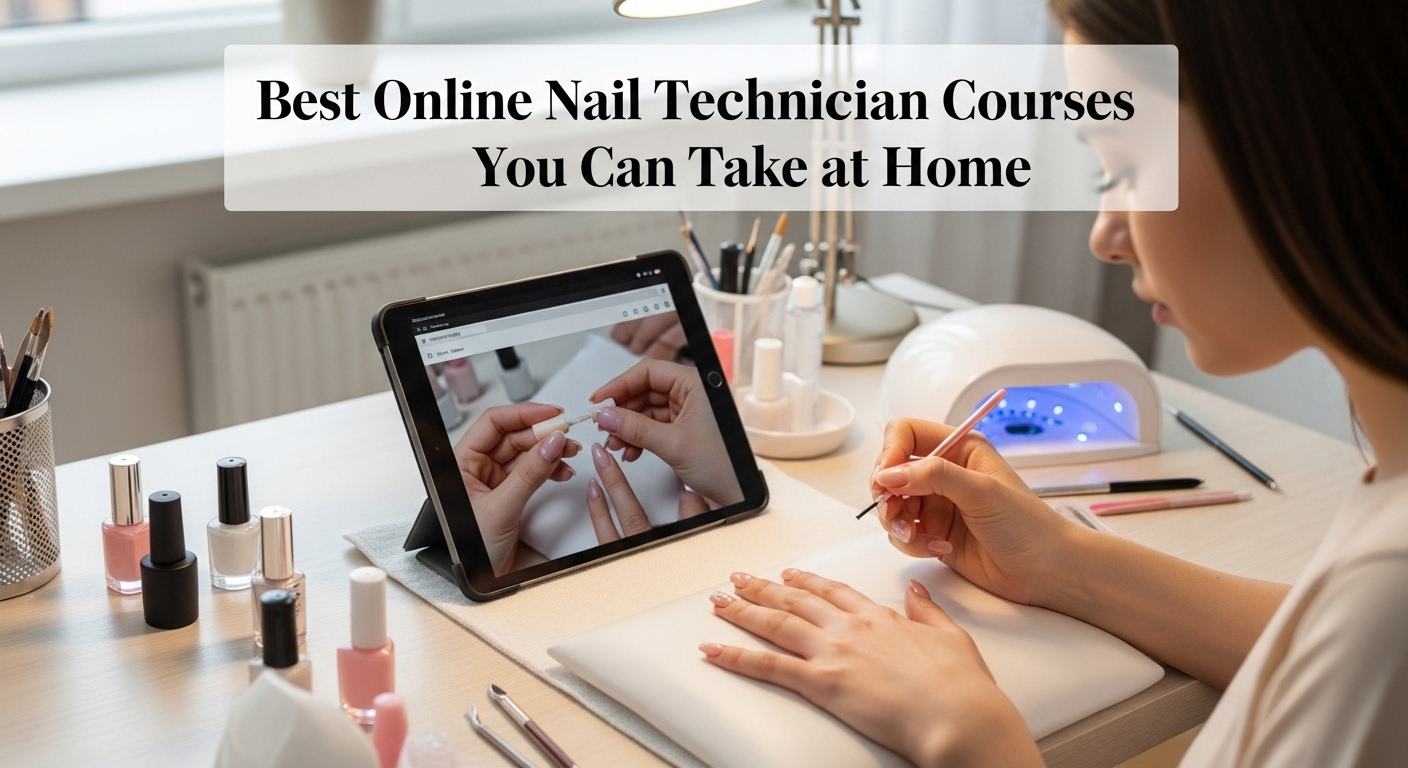

Let’s be honest – scrolling through Instagram and seeing those perfect gel nails or intricate nail art designs has probably made you think “I could do that!” And guess what? You absolutely can. The nail industry in South Africa is booming, and you don’t need to spend thousands on a fancy campus or drive across town three times a week to learn. Right now, from your couch in Johannesburg, Cape Town, or anywhere in between, you can start building a proper nail tech career.
Why Learn Nail Technology from Home?
Learning from home isn’t just about convenience (though let’s admit, that’s pretty great). It’s about fitting education into your real life. Maybe you’re working full-time, raising kids, or just prefer learning at your own pace without someone watching over your shoulder. Online courses let you pause, rewind, and practice until you get it right.
Plus, starting costs are way lower. You’re not paying for petrol, parking, or expensive campus fees. Most online courses cost between R1,500 and R8,000 – compare that to traditional beauty schools that can charge R15,000 or more.
What You’ll Actually Learn in These Courses
Before we get into specific courses, let’s talk about what makes a good nail tech programme. You want something that covers:
The Basics
- Nail anatomy (yes, there’s more to it than you think)
- Proper sanitation and hygiene practices
- Different nail shapes and how to file them
- Basic manicure and pedicure techniques
Advanced Skills
- Gel polish application and removal
- Acrylic nail extensions
- Nail art and design techniques
- Problem-solving for damaged nails
Business Stuff
- How to price your services
- Marketing yourself on social media
- Building a client base
- Safety regulations in South Africa
Top Online Nail Courses for South Africans
1. The Nail Hub Academy
The Nail Hub offers one of the most popular online programmes in South Africa. Their beginner course costs around R3,500 and includes video tutorials you can watch anytime. What makes them stand out? They actually send you a starter kit with brushes, files, and practice materials.
The course covers everything from basic manicures to gel application. You’ll get access to their private Facebook group where other students share tips and ask questions. It’s like having a study group in your pocket.
They also offer certification once you complete the modules and submit photos of your work. While it’s not a government-registered qualification, many salons recognize their training.
2. Beauty Therapy Training Online
This platform offers several nail courses starting from R2,200. Their “Complete Nail Technician Course” is self-paced, which means you can finish it in three weeks or three months – whatever works for you.
The video quality is really good (no fuzzy webcam recordings here), and they break down complicated techniques into simple steps. You’ll learn about nail diseases, proper product application, and even how to do a professional consultation with clients.
They provide PDF workbooks you can download and keep forever. Super helpful when you’re actually working on a client and need to refresh your memory quickly.
3. SA Beauty Academy Online
Based in Durban, SA Beauty Academy has moved much of their training online. Their nail technician course costs about R4,800 and includes live Zoom sessions twice a week. This is perfect if you like having a teacher you can ask questions to in real-time.
The course runs for six weeks, and you need to complete practical assignments. They’re pretty strict about this – you’ll film yourself doing different techniques and submit the videos for feedback. It feels more like a real classroom, just without leaving home.
According to the South African Department of Higher Education, proper training is important for anyone offering beauty services professionally.
4. International Open Academy (IOA)
IOA isn’t South African, but many local students use their platform. Their nail technician diploma costs around R1,500 when on sale (they have sales pretty often). For that price, you get lifetime access to the course materials.
The content is solid – covering everything from nail prep to running your own business. The downside? It’s very international, so some product recommendations might not be available here, and pricing examples are in dollars or pounds.
But here’s the good part: IOA is accredited internationally, which looks impressive on your CV or social media bio.
5. Local Beauty Schools with Online Options
Several established beauty schools now offer hybrid learning. Places like CIDESCO South Africa have online theory components, though you’ll need to attend some practical sessions in person.
These courses cost more (around R6,000 to R8,000) but give you a nationally recognized qualification. If you’re planning to work in established salons or want to register your own business officially, this route makes sense.
What You Need to Get Started
Don’t stress – you don’t need a full salon setup to begin learning. Here’s what most courses require:
Must-Haves:
- A practice hand (you can buy these online for R150-R300)
- Basic nail files and buffers
- Cuticle tools
- Base coat, polish, and top coat
- Good lighting
Nice-to-Haves:
- UV or LED lamp (for gel courses, around R400-R800)
- Acrylic powder and liquid (if learning extensions)
- Nail art brushes and dotting tools
- A comfortable workspace
Many online courses include starter kits, or they’ll send you a shopping list of exactly what you need. Don’t buy everything at once – get the basics first and add as you learn what you actually enjoy doing.
How Long Does It Take?
This depends on the course and how much time you can dedicate. Most basic programmes take 4-8 weeks if you’re studying a few hours each week. Advanced courses covering multiple techniques might take 3-6 months.
The real learning happens when you start practicing on actual people. After finishing your course, plan to spend at least another month or two working on friends and family before charging clients. Everyone’s learning speed is different, and that’s totally okay.
Is Online Learning as Good as In-Person?
Here’s the truth: online learning has some limits. You can’t physically feel when your teacher corrects your hand position, and you might need to figure some things out through trial and error.
But here’s what makes it work: you can rewatch difficult sections as many times as needed. Try doing that in a physical classroom! Plus, you learn to problem-solve independently, which is exactly what you’ll do when working with real clients.
Many successful nail techs in South Africa started with online courses and built amazing careers. Check out local nail artists on Instagram – you’ll find plenty who learned from home.
After You Finish: What Next?
Completing a course is just the start. Here’s how to actually build your business:
Practice, Practice, Practice Offer discounted or free services to friends and family. Ask them to be honest about their experience. Take photos of every set of nails you do – your portfolio is everything.
Set Up Your Social Media Instagram and Facebook are where most South African clients find their nail techs. Post clear photos of your work, share before-and-after shots, and engage with potential clients. Use hashtags like #NailsSA, #NailTechJHB, or whatever fits your location.
Understand Pricing Research what other nail techs in your area charge. In townships and smaller towns, a basic gel manicure might go for R150-R250. In suburbs and cities, prices can be R300-R500 or more. Price yourself fairly while you’re building experience.
Follow Health Regulations South Africa has specific health and safety rules for beauty services. Make sure you understand proper sanitation – your clients’ health depends on it. The Department of Health website has guidelines for beauty professionals.
Keep Learning Nail trends change constantly. What’s popular today might be old news in six months. Follow international nail artists, watch YouTube tutorials, and consider taking advanced courses as you grow.
Common Worries (And Why They’re Not That Scary)
“What if I’m not creative enough?” Nail art is a skill you develop, not a talent you’re born with. Start with simple designs and build from there. Many successful nail techs focus on perfect basics rather than complex art.
“Will people take me seriously without a fancy certificate?” Your work speaks louder than any certificate. If you can do beautiful nails that last, clients will come back. That said, having some kind of certification helps with marketing yourself.
“Can I really make money from this?” Absolutely. Many South African nail techs work from home and make R5,000-R15,000 per month part-time. Full-time techs can make R20,000+ monthly. It takes time to build your client base, but it’s definitely possible.
“What if I mess up someone’s nails?” You will make mistakes – everyone does when learning. That’s why you practice on willing friends first and charge less while building confidence. Always be honest with clients about your experience level.
Making Your Choice
The best online nail course for you depends on your goals, budget, and learning style. Want to just do nails for fun and friends? A cheaper course like IOA might be perfect. Planning to make this a serious business? Invest in something more thorough like SA Beauty Academy.
Read reviews from other South African students before paying for anything. Check if the course offers support after you finish – can you ask questions later? Do they update content when new techniques come out?
Most importantly, make sure the course actually teaches you to DO nails, not just talks about theory. You need practical demonstrations and chances to practice.
Your Nail Journey Starts Now
Learning to be a nail technician from home is completely doable in 2025. You’ve got the internet, affordable courses, and a growing market of people who want beautiful nails. What you do with that is up to you.
Maybe you’ll turn this into a full-time career. Maybe you’ll just do nails on weekends for extra cash. Either way, it starts with picking a course and actually starting.
Stop scrolling through pretty nail photos and start learning how to create them yourself. Your future clients are waiting – they just don’t know it yet.