
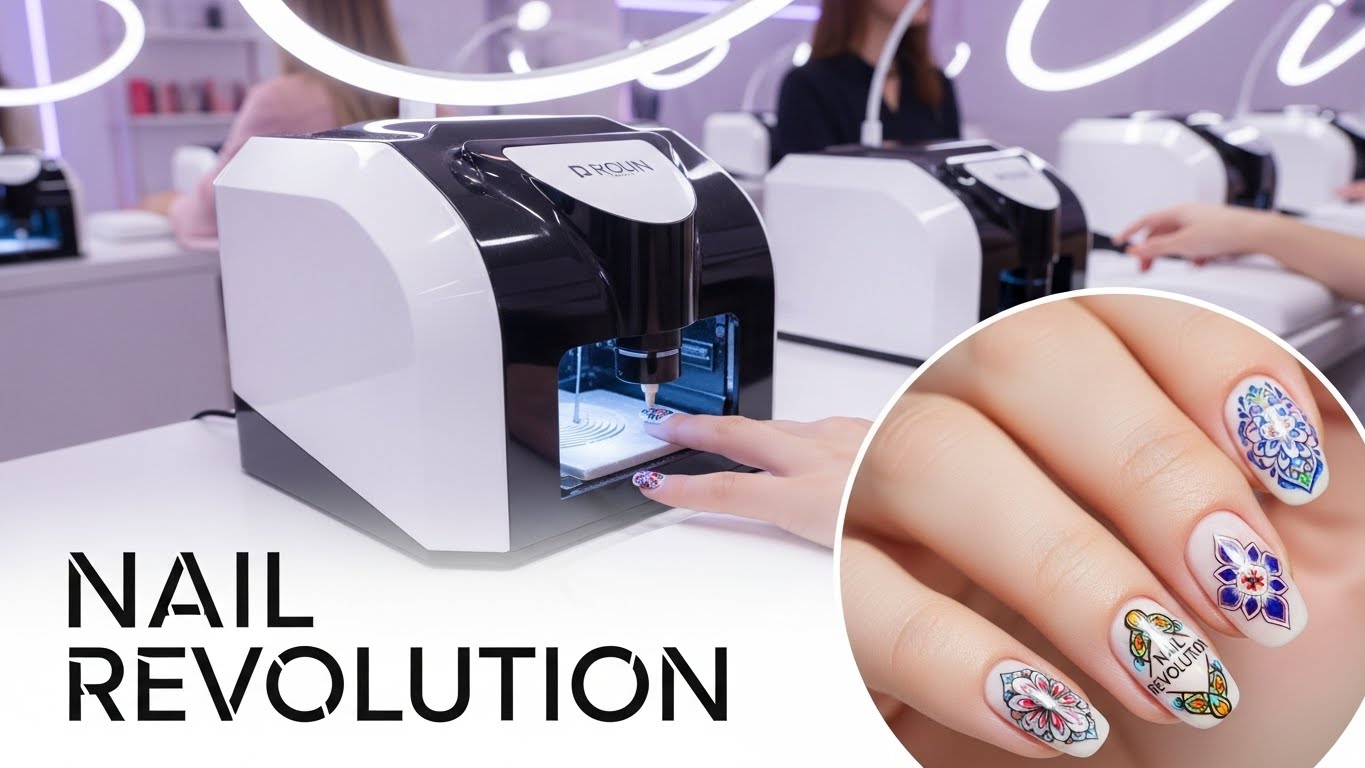

Nail printers are changing the nail industry by making nail art faster, more creative, and easier to offer in any salon. With a nail printer, a full detailed design that used to take 30–40 minutes by hand can now take 3–5 minutes. This means more clients, more income, and happy customers who can get almost any picture on their nails, from a Springboks logo to a baby photo.
What is a nail printer?
A nail printer is a small machine that prints designs directly onto the nail.
Think of it like a tiny photo printer, but for nails.
You still use gel polish or a special base coat, but instead of painting the art by hand, the machine prints the picture.
You can print:
- Flowers
- Logos
- Cartoon characters
- Flags
- Photos of faces
- Patterns (marble, animal print, etc.)
Some printers are made for home use. Others are bigger, stronger, and made for busy salons.
How does a nail printer work?
Most salon nail printers work in a similar way. Here is a simple step-by-step:
Prep the nail
- Clean, file, and shape the nail.
- Push back cuticles.
- Apply base gel and cure under a lamp.
Add the special base layer
- Many printers need a special “print base” or gel.
- This helps the ink or colour stick to the nail.
- Cure it under a lamp if needed.
Choose the design
- Use the printer’s screen, app, or tablet.
- Pick from the built-in designs, or
- Upload a photo from your phone (for example, a client’s face, a soccer team logo, or a brand logo).
Place the finger in the machine
- The client puts one finger (or sometimes more, depending on the machine) into the slot.
- You line up the nail using the screen guide so that the design prints in the right place.
Print
- Press “print” on the screen.
- The printer sprays tiny drops of colour onto the nail, like an inkjet printer.
Seal the design
- Apply top coat gel.
- Cure under the lamp.
- The design is now sealed and should last like normal gel polish.
The total print time for one nail is often under one minute. Full sets are much faster than detailed hand-painted sets.
Why nail printers are a big deal in South Africa
From salons in Sandton to small nail bars in townships and malls, time and money matter. Nail printers speak to both.
1. Speed: serve more clients in a day
Many South African salons are busy, especially on pay days and month-end. Nail printers help by:
- Cutting design time per client.
- Allowing one nail tech to work on two clients at once (printers can work while you prep the next client).
- Reducing wait time for walk-ins.
If you can finish one extra full set per day, that is more money every month without growing your team.
2. More design options for clients
Clients in SA love trends. Today it’s chrome, tomorrow it’s anime, then Disney, then local club logos.
With a nail printer, you can say “yes” to almost any idea:
- Heritage Day nails with South African flag details.
- Matric dance nails with matching dress patterns.
- Wedding nails with the bride and groom’s initials or faces.
- Rugby or soccer team nails during big matches.
No need to say, “Sorry, that design is too hard” or “I can’t paint faces.”
3. Consistent designs for brands and events
For salons that do:
- Corporate events
- Brand activations
- School dances or sports days
- Bridal parties
Nail printers help you:
- Put the same logo or pattern on many nails very fast.
- Keep every nail looking the same.
Brands love this, and they are often willing to pay more for neat, matching sets.
4. New service packages
Nail printers open doors to new ideas, for example:
- “Photo nails” days in the salon.
- Kids’ nail parties with cartoon prints.
- Monthly design clubs where clients pay a set fee for unique printed art each month.
This makes your salon stand out from others on the same street.
Will nail printers replace nail techs?
Short answer: no.
A nail printer is a tool. It cannot:
- Prep the nail plate correctly.
- Shape square, almond, coffin, or stiletto nails.
- Build acrylic or builder gel structure.
- Judge what suits each client’s hand shape and skin tone.
- Talk to clients, give advice, and build a loyal client base.
What it can do is help nail techs:
- Finish more detailed work in less time.
- Offer art even if they are not strong at hand painting.
- Reduce hand strain from long hours of tiny brush strokes.
Think of it like an e-file. When e-files became common, many people also thought jobs would go away. Instead, good nail techs used them to work faster and better. The same is true for nail printers.
Nail printer vs traditional hand-painted nail art
Both have a place in the salon.
Nail printer art
Pros:
- Very fast for complex designs.
- Can print faces, photos, small text, and logos.
- Great for events and big groups.
- Easy to repeat the same design on many nails.
Cons:
- You rely on electricity (and sometimes Wi‑Fi).
- Machine can break or need service.
- Some clients still prefer the “handmade” feel.
Hand-painted art
Pros:
- Full control of each line and stroke.
- You can freestyle and change the design as you go.
- Many clients love knowing a real artist painted their nails.
Cons:
- Takes long, especially for portraits and tiny detail.
- Harder for new techs who are still learning art skills.
- Your hand can get tired and shaky after many clients.
The best salons use both. For example:
- Use printer for photos, logos, and tricky detail.
- Use hand work for lines, French tips, ombré, and 3D art.
Types of nail printers
1. Home or personal nail printers
- Small and cheaper.
- Often print simple designs.
- Made for people who want to do their own nails.
2. Professional salon nail printers
- Bigger and stronger.
- Can print higher-quality designs and photos.
- Have more settings for different nail shapes.
- Come with support, training, or local agents.
3. Portable nail printers
- Some salon models are small enough to move around.
- Handy for mobile techs or events at malls, schools, or markets.
When shopping in South Africa, you will see a mix of imported brands from China, Europe, and the US, as well as local distributors who bring them in and offer after-sales help.
How much do nail printers cost in South Africa?
Prices change often, but here is a rough guide in rand:
- Entry-level / small machines: around R8 000 – R15 000
- Mid-range salon printers: around R20 000 – R40 000
- High-end salon systems: around R45 000 – R80 000+
Things that affect price:
- Brand name and build quality.
- Print quality (photo level or simple art).
- Speed of printing.
- Warranty and local repairs.
- Software features (apps, design library, updates).
Always ask:
- Is there a local agent in South Africa?
- Who will fix it if it breaks?
- What is the warranty period?
- How much do ink cartridges or special gels cost per set?
Sometimes a cheaper machine ends up costing more over time if the ink or special base coats are very expensive.
What do you need in your salon to use a nail printer?
Before you buy, check your setup.
1. Space
- A stable table or stand.
- Enough workspace so clients can sit comfortably.
- A plug point nearby.
2. Power
With load shedding, think carefully:
- Does your back‑up power (inverter or generator) handle the printer as well as lamps and lights?
- Some printers pull more power than others.
3. Internet (for some models)
- Many printers use Wi‑Fi or an app for designs.
- Make sure your connection is steady, or that the printer can still work offline with saved designs.
4. Products
- Special base coat or gel that the printer brand recommends.
- Top coat to seal the design.
- Good quality gels so the client’s nails last 2–3 weeks without chipping.
5. Staff training
- Nail techs must learn how to line up the finger and nail.
- They must know how to choose clear designs that print well.
- They must be able to fix small mistakes fast.
Most problems with nail printers in salons come from poor prep or wrong use, not from the machine itself.
Are nail printers safe?
When used correctly, nail printers are as safe as normal gel nails.
Key points:
- The printer usually uses cosmetic-grade ink or special colour that is made for nails.
- You still need to follow normal prep steps to avoid lifting and damage.
- Hygiene rules stay the same: clean tools, clean hands, no cross‑use of files on different clients.
Things to watch out for:
- Allergies: As with any gel or nail product, some clients may react. Check if they have had bad reactions before.
- Skin contact: Try to avoid spraying ink on the skin around the nail. Wipe gently if it happens.
- Ventilation: Like with normal polish, good airflow in the salon is always a good idea.
Always follow the maker’s manual. If the machine is from outside South Africa, ask the seller if the inks are allowed for cosmetic use here.
Skills nail techs still need in the age of nail printers
Even with a fancy printer, a salon is only as good as its team. Nail techs still need strong skills:
- Nail prep: This step decides how long the set will last.
- Shaping: Clients care a lot about the shape and length of their nails.
- Product control: How much gel to use, how to avoid flooding cuticles, how to prevent lifting.
- Design sense: Even with a printer, you must help clients choose designs that suit their nail shape, skin tone, and job.
- Client care: Talking kindly, keeping time, managing bookings, and building long-term trust.
A printer adds to your service. It does not replace good hands.
Ideas to make money with a nail printer
If you buy a nail printer, you should have a clear plan to earn back your money.
Here are some ideas:
1. Add-on nail art fees
- Charge a small fee per printed nail (for example R20–R50 per nail depending on design).
- Or offer “full set with printed art” at a higher price.
2. Special packages
- Wedding package: Bride + bridesmaids with matching photo or initials.
- Birthday package: Birthday girl gets custom cartoon or photo nails.
- Sport days: Team nails during World Cup, AFCON, PSL big games.
3. Events and pop-ups
- Set up a small stand at:
- School fairs
- Matric dances
- Corporate fun days
- Shopping mall weekends
Charge quick set prices for simple base plus one or two printed nails.
4. Brand deals
- Offer local brands printed logo nails during a product launch or campaign.
- You can charge per person or for a full event.
5. Social media content
- Post short videos of the printer at work on TikTok, Instagram, and Facebook.
- Clients are often curious when they see the machine in action.
- New clients may book just to try “photo nails”.
How to choose the right nail printer for your salon
When I speak to salon owners about nail printers, these are the main points I suggest they check.
1. Print quality
- Are photos clear or grainy?
- Are colours bright and true to the picture?
- Ask to see real nails in person, not only photos online.
2. Speed
- How long for one nail?
- How long for a full set with designs on all fingers?
- In a busy salon, even a few minutes make a difference.
3. Ease of use
- Is the menu simple?
- Can your team learn it quickly?
- Is the app (if there is one) stable on Android and iPhone?
4. Design library and updates
- Does it come with a big design library?
- Do they add new designs often?
- Can you upload your own designs and photos?
5. Ink and product costs
- How much are ink cartridges or special gels?
- How many sets can you print per cartridge?
- How easy is it to buy refills in South Africa?
6. Support and warranty in South Africa
- Is there a local office or agent?
- Do they offer training?
- How long is the warranty?
- How quickly can they fix or replace parts?
Always ask other salon owners for honest feedback if they already use that brand. Facebook groups and local salon WhatsApp groups can be very helpful.
Common questions about nail printers
How long does printed nail art last?
If you prep well, use good base and top coat, and the client cares for their nails, printed art can last as long as normal gel polish (2–3 weeks, sometimes longer).
Can you print on acrylic or builder gel?
Yes. In most cases you:
- Build the acrylic or builder gel.
- Shape and buff.
- Apply the printer’s base coat.
- Print.
- Seal with top coat.
Always check the machine’s manual for the best product steps.
Can clients bring their own photos?
Most salon printers allow this. Just make sure:
- The photo is clear and not too dark.
- You have rights to use the image (be careful with copyrighted pictures or brand logos).
Can the printer do all ten nails at once?
Most machines do one nail at a time. Some newer systems can do more, but the most common ones in salons still do single fingers. Even with that, it is much faster than hand art for detailed pictures.
Does it hurt?
No. The printer does not touch the nail with needles. It sprays ink or colour gently, like a normal printer.
How do you clean the machine?
Each brand has its own cleaning steps, but in general:
- Wipe the inside where the finger goes.
- Keep dust and product away from moving parts.
- Use the cleaning function in the menu if there is one.
- Do a deeper clean often if your salon is busy.
Where to see nail printers in action in South Africa
If you are not sure yet, try to see a printer live before you buy.
You can:
- Visit beauty trade shows in Johannesburg, Cape Town, or Durban. Many tech brands show their machines there.
- Ask local distributors for a demo at their showroom.
- Join South African nail tech groups on Facebook and ask if anyone near you will let you visit and watch.
Some suppliers also offer free or low-cost training days when you buy a machine, which helps your team feel more confident.
What nail printers mean for the future of the nail industry
Nail printers are not just a toy or a short‑term trend. They are part of the way salons are changing:
- Clients want faster service but still want unique nails.
- Salons need new ways to stand out and keep chairs busy.
- Tech keeps moving forward, and beauty always follows.
In South Africa, where many people love bold, creative nails, printers give salons a strong tool to grow. The salons that think ahead now, learn the machines, and mix them with strong basic nail skills, will be the ones that stay busy in the years to come.
For salon owners and nail techs, the key is simple: do not fear the machine. Learn it, use it, and let it help you create art that your clients will talk about long after they leave your chair.