
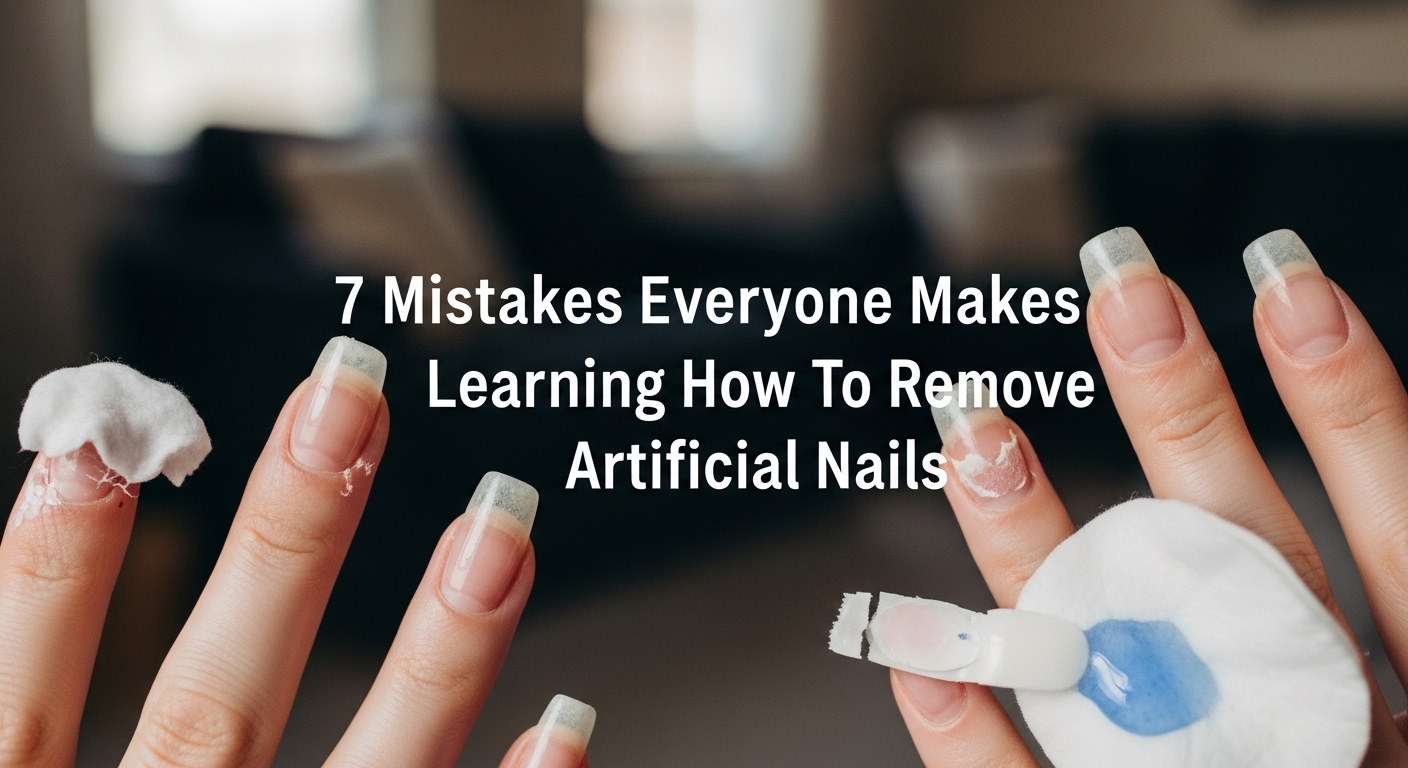

7 Mistakes Everyone Makes Learning How To Remove Artificial Nails (And How I Stopped Wrecking My Own)
Let me be honest with you.
The first time I tried to take off my acrylic nails at home, I almost cried. I was sitting on my bed, late at night, pulling and biting at them like a wild person. One nail ripped halfway off. There was blood. I had a wedding that weekend. I wanted to scream.
If you’ve ever tried to remove fake nails on your own and ended up with sore, thin, ugly natural nails, I know exactly how you feel. That’s why I wanted to talk about the 7 Mistakes Everyone Makes Learning How To Remove Artificial Nails and what actually works instead.
I’ll keep it simple, chatty, and real. Think of this as a friend-to-friend nail rescue session.
Why Removing Artificial Nails Feels So Hard
You’d think taking nails off would be easier than putting them on, right? But no.
People (me included) usually:
- Tear them off when they’re lifting
- Use anything sharp they can find
- Get impatient and rush the soak-off
- Then wonder why their natural nails look like they went through a war
So let’s go through the 7 Mistakes Everyone Makes Learning How To Remove Artificial Nails, one by one, so you don’t keep hurting your real nails every time you say, “I’ll just do them at home.”
Mistake 1: Ripping Them Off Because You’re Impatient
I used to do this all the time. The nail lifts a bit on the side, and my brain goes, “Oh cool, it’s ready to come off.” Then I tug. Hard.
Here’s the problem:
When you pull off acrylic or gel nails, you’re not just removing the fake nail. You’re also peeling off layers of your own natural nail plate. That’s why your nails feel:
- Thin
- Rough
- Super sensitive
What to do instead:
- Never force a nail off.
- If it doesn’t slip off easily during removal, it’s not ready.
- Soak longer or file more, but don’t yank.
I know it’s tempting, especially when you’re tired. But this one habit causes the most damage.
Mistake 2: Skipping The Filing Step
When I first tried to remove acrylic nails at home, I thought, “I’ll just soak them in acetone and wait.” I sat there forever. Nothing happened.
Here’s the trick no one tells you at first:
You must file off the shiny top coat or gel layer before soaking.
Why this matters:
- Most artificial nails have a hard top layer that blocks the acetone.
- If you don’t file it off, the remover can’t get inside the product.
- You end up soaking for an hour and still scratching at the nail.
Do this instead:
- Use a nail file (100/180 grit if you know your files).
- Gently file off the top shiny layer of the acrylic, gel, or press-on glue.
- Don’t go crazy and hit your natural nail. Just remove the gloss.
This one small step makes your whole removal faster and way easier.
Mistake 3: Using Pure Acetone Wrong
Yes, acetone is harsh. Yes, it dries your skin. But it also works really well when you use it the right way. A lot of people hate it because they’re using it wrong.
Common problems:
- Soaking fingers straight in a bowl (super drying)
- Using way too little acetone
- Letting it evaporate before it does its job
A better way to use acetone:
- Soak cotton pads or balls in acetone.
- Place them on the nails.
- Wrap each finger in foil (or use those little nail clips if you have them).
- Wait 15–20 minutes before checking.
This keeps the acetone in contact with the product and stops it from evaporating too fast. Yes, your hands might look a bit mad-scientist with foil fingers, but it works.
Mistake 4: Not Protecting Your Skin And Cuticles
When I was new to all this, I’d soak my fingers in acetone and then wonder why my skin was white, tight, and burning.
Acetone doesn’t only break down acrylic and gel. It also dries out your skin, cuticles, and natural nails.
Here’s how I protect my hands now:
- Before starting, I apply a thin layer of petroleum jelly or cuticle oil around the nails (but not on the nail plate).
- I try keep the acetone only on the nail, not my whole finger.
- After removal, I wash my hands with soap and water and then use a rich hand cream and more cuticle oil.
This simple care step makes a huge difference over time. Your nails and skin won’t feel so tired and sore after every removal.
Mistake 5: Being Rough With Tools
I’ve seen people (and I have 100% done this myself) use:
- Metal cuticle pushers
- Tweezers
- Butter knives
- Even teeth
…to scrape off soft product after soaking.
Yes, the acrylic or gel might look “mushy” after acetone, but if you scrape too hard, you still damage your own nail.
Try this instead:
- Use a wooden orange stick or a gentle cuticle pusher.
- Push very softly, only where the product has lifted.
- If it doesn’t move with light pressure, soak another 5–10 minutes.
Think “wipe it away” not “dig it off.”
Mistake 6: Forgetting To Give Your Nails A Break
Here’s something people don’t talk about enough when we list the 7 Mistakes Everyone Makes Learning How To Remove Artificial Nails.
Even if you do everything right, your nails still need rest. If you:
- Wear acrylics non-stop
- Swap from acrylics to gel to press-ons to tips with no gap
- Never let your natural nails breathe
…they’ll eventually get weak and bendy.
After removing artificial nails:
- Lightly buff the surface so it’s smooth.
- Use a strengthening base coat (not a harsh one that burns, just a gentle fortifying polish).
- Give your nails at least a week off every few cycles, if you can.
I know it’s hard when you love your nails done, especially here where we always have events, braais, or weddings. But even a short “nail holiday” helps.
Mistake 7: Not Having A Simple Plan Before You Start
This one sounds small, but it’s huge.
When I first googled 7 Mistakes Everyone Makes Learning How To Remove Artificial Nails, I realised my real problem wasn’t just one thing. It was that I always started the process without any plan. I just sat down and hoped for the best.
Then halfway through I’d:
- Realise I had no acetone
- Start digging with random tools
- Get frustrated and rip the last few off
Now I make sure I have:
- Pure acetone (or as close as I can get from Clicks / Dis-Chem)
- Cotton pads or balls
- Foil or nail clips
- A nail file
- A wooden stick or gentle cuticle pusher
- Cuticle oil and hand cream
Once everything is ready, the whole thing feels calmer and faster. I’m not running around with one hand in foil, looking for a file in some random drawer.
Quick Step-By-Step: How I Safely Remove Artificial Nails At Home
Here’s my simple routine, based on avoiding the 7 Mistakes Everyone Makes Learning How To Remove Artificial Nails:
File the top
- Gently remove the shiny top coat with a nail file.
Protect skin
- Apply a bit of petroleum jelly or cuticle oil around, but not on, the nails.
Soak with acetone
- Soak cotton in acetone.
- Place on nail and wrap with foil.
Wait 15–20 minutes
- Put on a series or music so you don’t rush.
Gently push
- Remove foil and softly push off softened product.
- If it resists, don’t fight it. Soak again.
Buff and clean
- Lightly buff any leftover bits.
- Wash hands well.
Moisturise and rest
- Apply cuticle oil and hand cream.
- Give your nails a little break if you can.
Bringing It Back To You
I’ve made every single one of these mistakes. That’s why I wanted to put all of this into one place and walk you through the 7 Mistakes Everyone Makes Learning How To Remove Artificial Nails like we’re just chatting at my kitchen table.
You don’t have to:
- Rip your nails off in pain
- Spend a fortune at the salon every time
- End up with thin, sad natural nails
With a bit of patience, the right tools, and a gentle touch, you can remove your own acrylics, gels, and press-ons at home without ruining your real nails.
Your Turn
Next time your artificial nails start lifting or growing out, don’t rush and don’t panic.
- Save this guide.
- Get your tools together first.
- Follow the steps, slowly.
If you want, tell me: which of these 7 mistakes have you made the most? And would you like a step-by-step guide for safe DIY nail prep or how to choose the least damaging artificial nails next?