
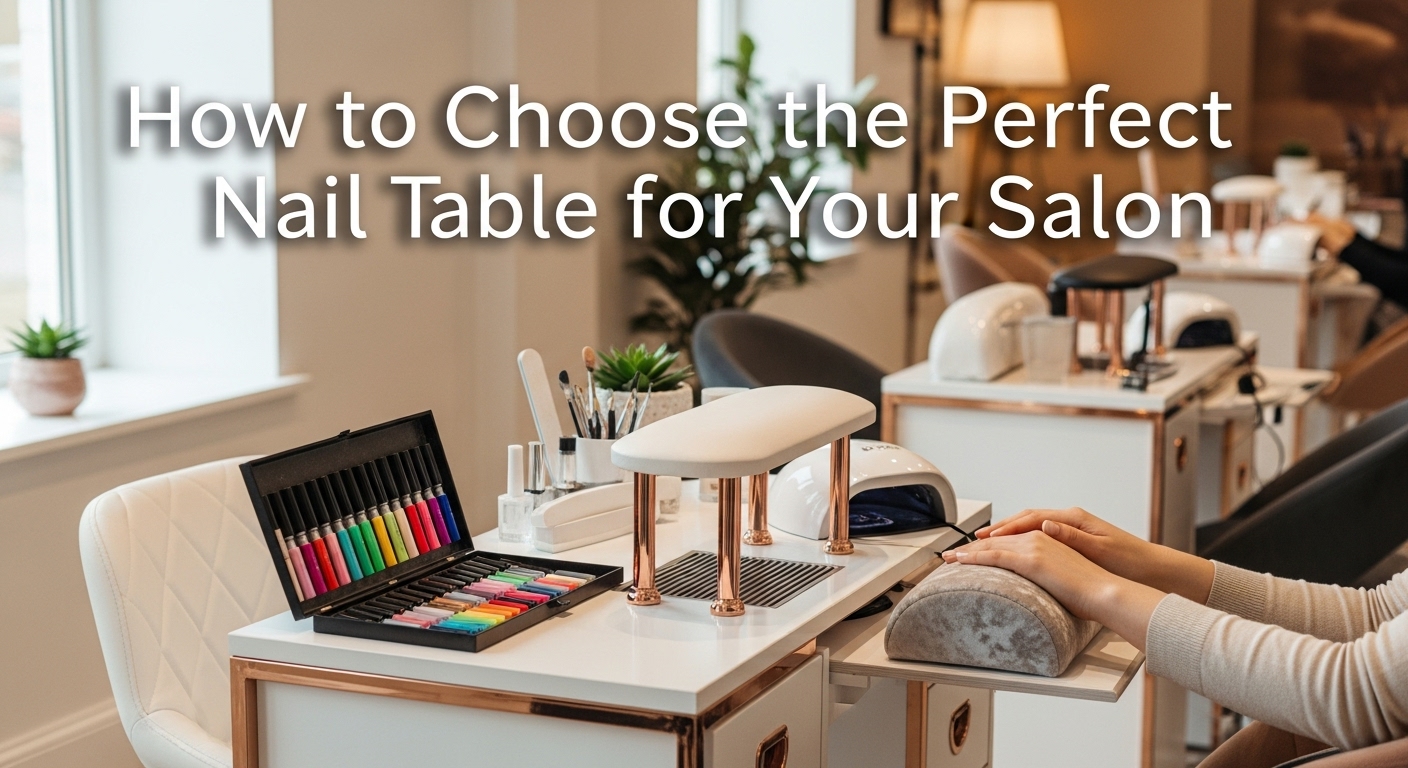

When you’re setting up a new nail salon or upgrading an existing one, the first thing people usually ask you is: “Where do you buy a nail table?” That question really matters because a good table will keep clients happy, help you work faster, and keep your hands protected for years. In this post we’ll walk through the practical steps to pick a nail table that fits your space, budget, and workflow exactly.
Measure Your Salon Space
Before you even look at a single piece of furniture, put a tape measure in front of the wall where the table will go. Record the width and depth. A table that’s too wide will crowd the room and feel cramped; one that’s too narrow will make it hard to reach the nail station comfortably. Once you know the numbers, you can start checking out tables that fit.
Pick the Right Height
A nail table should be level with the client’s elbow when they sit at the chair. Most desks are 80‑85 cm high. If you have a very short or a very tall client base, you can look for adjustable‑height models.
- Fixed height tables are cheaper (about R1,200‑R2,000) and sturdy.
- Adjustable height tables cost around R3,000‑R4,500 but allow you to change the height with a lever or a small motor.
Choose based on how much your clients’ heights differ.
Think About Comfort
Clients will be on the chair for 30‑45 minutes. The table should have a firm, smooth surface that doesn’t cause wrist fatigue. Look for tables with a tongue‑and‑groove joint for extra strength or a padded underside if you prefer extra cushion.
Check the Material
| Material | Pros | Cons |
|---|---|---|
| Wood | Warm look, easier to clean | Can soak up stains, heavier |
| Metal | Durable, cleaner, lighter | Can get cold, may squeak |
| Hybrid | Combines wood‑finish with metal frame | Slightly more expensive |
If you’re in a hot climate like Cape Town or Durban, metal helps keep the surface cool. In cooler areas, a wooden top feels friendlier.
Decide Between Portable and Fixed
- Portable tables (with wheels) let you set up a station in different areas of the salon. They’re good if you have a shared workspace. Expected price: R2,500‑R3,500.
- Fixed tables stay in one spot, often under a clamp that attaches to a wall. They’re great for a private booth and usually cheaper: R1,500‑R2,500.
Make a Budget
The range in South Africa is usually between R1,200 and R5,000. Consider what you’ll use it for:
- A delivery‑only salon: R1,200‑R2,500
- A full‑service salon with a nail bar: R3,000‑R5,000
- A high‑end boutique: Start at R4,500
Don’t forget to add a small cushion for the chair if you don’t already have one.
Look for a Trusted Supplier
South African brands like BeautyHub, Cape Nails, and Durban Furniture have good reputations for quality and delivery time. Reading reviews on their websites or on platforms like Instagram (search the product name) can give you real‑world feedback from other nail technicians.
If you want a “made‑to‑order” table, local carpenters can build something that meets your exact dimensions. Usually, that costs a bit more (ZAR 1,200 extra) but you get a one‑of‑a‑kind piece.
Test It Out
If possible, visit the store and sit down on the chair next to the table. Feel how it sits under your hand. Check that the surface is flat and that the table won’t wobble. Ask the sales rep how easy it is to clean and whether they provide a guarantee.
Upgrade When the Time Comes
If your table is already more than five years old, look for signs like scratches, loose joints, or a warped surface. While durable tables can last a decade or more, a fresh look often boosts client perception of quality.
Bottom line: Measure first, think about height and comfort, choose a material that suits your climate, set a realistic budget, and shop from vendors who talk to real salon owners. With these steps, you’ll select a nail table that supports your daily rhythm and keeps clients coming back for repeat appointments.